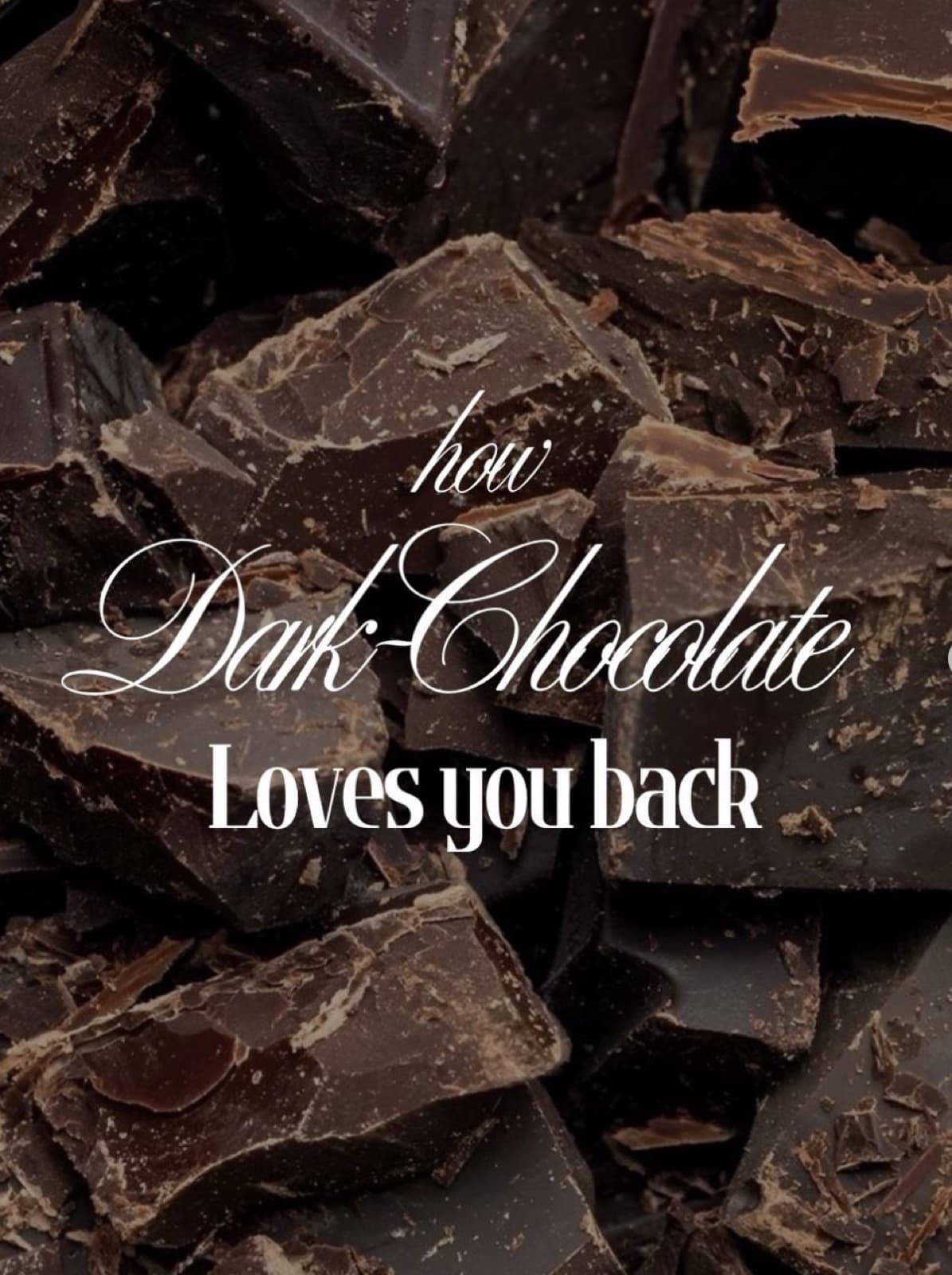
Most of the functional claims made for chocolate are made for something you aren't eating. Worth getting the distinction straight before anything else.
Cacao is not chocolate
Raw cacao — minimally processed, bitter, highest in flavanols. Cocoa — roasted, some flavanol loss, still good. Dark chocolate, 70%+ — cacao plus fat and a little sugar. The practical everyday version. Milk chocolate — mostly sugar and milk fat. Lovely. Not the subject of this page.
The active compounds are bitter. Anything that has had the bitterness processed out has usually had the benefit processed out with it. Bitterness is the marker.
Anti-inflammatory
Cacao contains polyphenols and flavanols, which help modulate inflammatory pathways and reduce oxidative stress.
Cacao is among the most polyphenol-dense foods available — by weight, more than most berries and most teas.
Two things follow. Oxidative stress is the cumulative damage from reactive molecules, and it's implicated in ageing skin and tissue generally. Polyphenols intercept it. And inflammatory pathways are modulated rather than blocked — inflammation is necessary and the problem is when it runs chronically at low level, which is precisely where these compounds are useful.
This is also why cacao appears in the puffiness list.
Heart health
Cacao's flavanols boost nitric oxide, opening up blood vessels. Better circulation → healthier blood pressure and heart function.
The clearest mechanism of the three. Flavanols increase nitric oxide production in the lining of your blood vessels. Nitric oxide relaxes the vessel wall, the vessel widens, and blood moves through at lower pressure.
That's the same pathway several blood pressure medications target, at a far smaller magnitude. Not a replacement for anything — but a real, measurable effect from a food, which is rarer than the wellness industry implies.
Better circulation also means better delivery to skin and to muscle, which is the connection between this page and most of the others.
Mood
Theobromine and phenylethylamine compounds encourage serotonin and endorphin activity, helping you feel calm and focused.
Theobromine is caffeine's gentler relative. It's a mild stimulant with a longer, flatter curve — alertness without the spike and crash, and without the cortisol response coffee produces. If coffee makes you anxious, this is why cacao doesn't.
Phenylethylamine is associated with endorphin release. Present in small amounts, and most of it is metabolised quickly — so the honest position is that the mood effect is real, modest, and partly about the ritual. Which is fine. The ritual is a legitimate mechanism.
Cacao is also magnesium-dense, which matters more than the exotic compounds. Magnesium is depleted by stress and needed for the systems that regulate it — which is why cacao and pumpkin seeds both appear on the cortisol list.
The craving for chocolate in the luteal phase is not random. It's often a magnesium request.
How to actually get it
- Raw cacao powder in a smoothie, in oats, in chia pudding. The most concentrated route.
- Cacao nibs on yoghurt. Bitter, crunchy, no sugar at all.
- Dark chocolate, 70% or higher. A few squares. The version you'll actually keep doing.
- After a meal, not on an empty stomach — same food, gentler glucose curve.
Two honest caveats. Cacao contains theobromine and some caffeine — a lot of it late at night will affect your sleep. And cacao can carry cadmium, particularly from certain growing regions; enormous daily quantities of raw powder are not better than moderate amounts.
- Milk chocolate for the health benefits. The flavanols are in the bitter fraction, and milk chocolate has very little of it.
- "Alkalised" or Dutch-processed cocoa. Processing removes much of the flavanol content. Check the label.
- On an empty stomach. Especially in a sweetened form. After a meal instead.
- Late at night. Theobromine is a stimulant with a long tail.
- Enormous quantities of raw powder daily. Cadmium is a genuine consideration at that volume.
- Ignoring the luteal-phase craving. It's often magnesium. Answer it rather than overriding it.
The one thing
A square or two of 70%+ dark chocolate after dinner, rather than a sweet thing at four in the afternoon on an empty stomach.
Same pleasure, entirely different metabolic event, and the polyphenols come free.