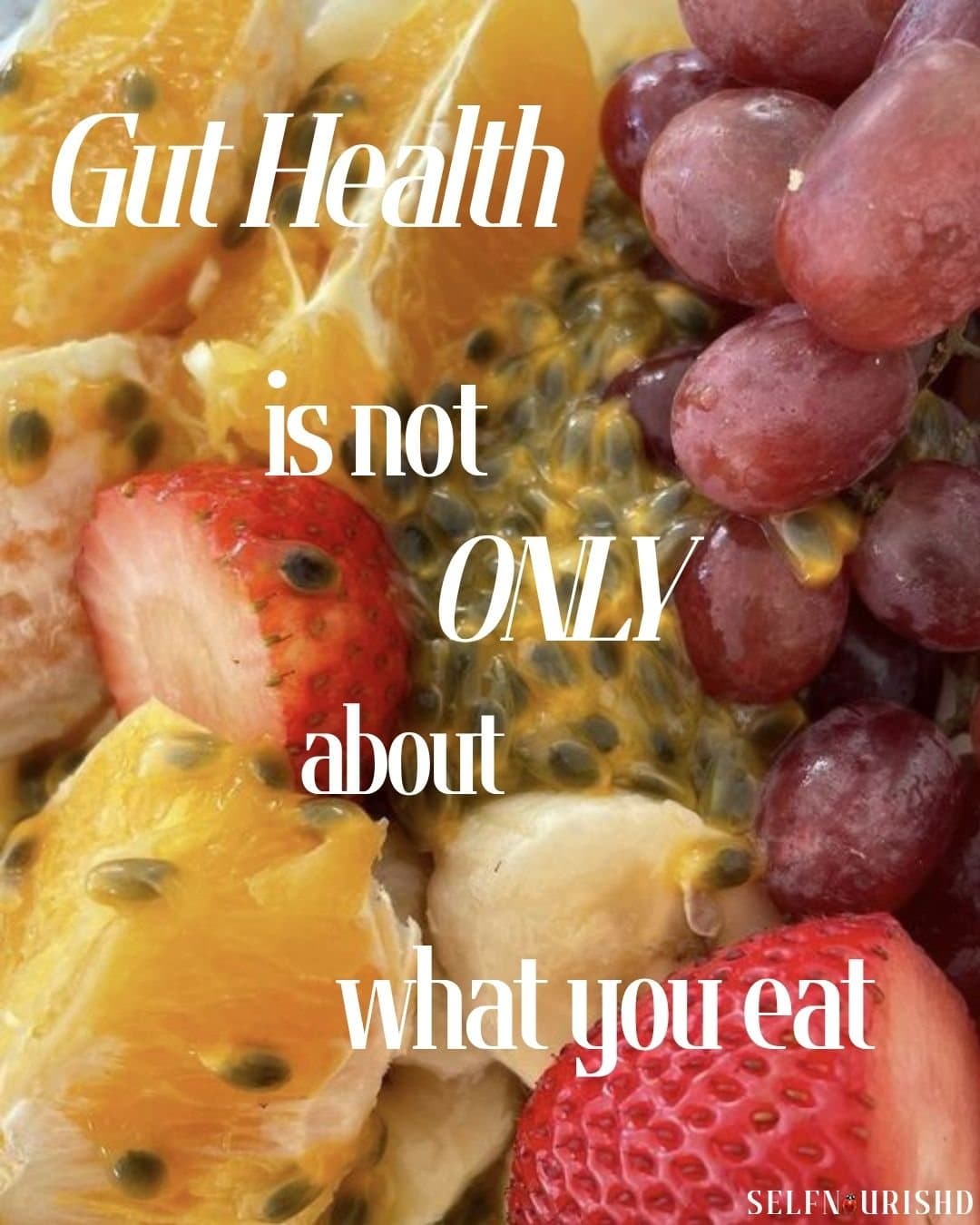
We talk about gut health like it's purely a digestion thing — eat more fibre, drink more water, done. But your gut is connected to pretty much everything else going on in your body. When it's out of balance, the effects ripple outward in ways you might not immediately connect back to your gut at all.
What an imbalanced gut actually feels like
When your gut is out of balance, your whole body feels it. The most obvious signs are digestive ones — irregular digestion, bloating, that uncomfortable fullness that won't shift. But it doesn't stop there. Low energy and inflammation are also common signals that something in the gut isn't quite right.
The thing is, none of these feel like 'gut problems' on their face. You might just think you're tired, or that your skin is playing up, or that you're in a mood — when actually, it's worth looking a little deeper.
Feed your microbiome: the case for prebiotics
Prebiotics feed your good gut bacteria, keeping your microbiome balanced. They're not the same as probiotics — instead of introducing new bacteria, they act as food for the beneficial bacteria already living in your gut. The good news is that prebiotic foods are pretty ordinary and easy to add to meals you're already eating.
Your gut and your skin are talking to each other
An unbalanced microbiome can sabotage your skincare routine. If you're dealing with irritation, acne, eczema, or rosacea and your topical products aren't cutting it, your gut might be part of the conversation. Reducing inflammation in your gut can make your skin glow in a way that no serum quite manages on its own.
Three simple habits sit at the intersection of gut health and skin health: staying hydrated, eating a wide variety of colourful foods (eating the rainbow is a cliché for a reason), and limiting alcohol, which is a known disruptor of the gut lining.
The gut-brain connection works both ways
This one surprised me when I first came across it. Disruptions in gut health may lead to brain fog, anxiety, mood swings, and disrupted sleep. But the connection isn't one-directional — your mind also influences your gut. Stress, poor sleep, and not taking care of yourself mentally can all have a knock-on effect on your microbiome.
That means that meditation, quality sleep, self-care, and stress management aren't just good for your mental health — they can have a positive impact on your microbiome too. Gut health and mind health are genuinely intertwined.
Gut health is just about what you eat.
Food matters, but so does your stress levels, how well you sleep, and how you manage your mental load. Your gut health is a full-picture thing.
- Focusing only on food and ignoring the stress, sleep, and lifestyle factors that also shape the microbiome.
- Treating skin, energy, and mood issues in isolation instead of considering whether the gut might be a common root cause.
- Skipping prebiotic foods in favour of expensive supplements when simple whole foods do the job.
- Expecting quick fixes — the microbiome responds to consistent habits over time, not one-off efforts.
Pick one prebiotic food from the list — bananas, oats, garlic, onions, avocado, flax seeds, or artichokes — and find a way to work it into a meal every day this week. That's it. Small and consistent beats perfect and occasional every time.