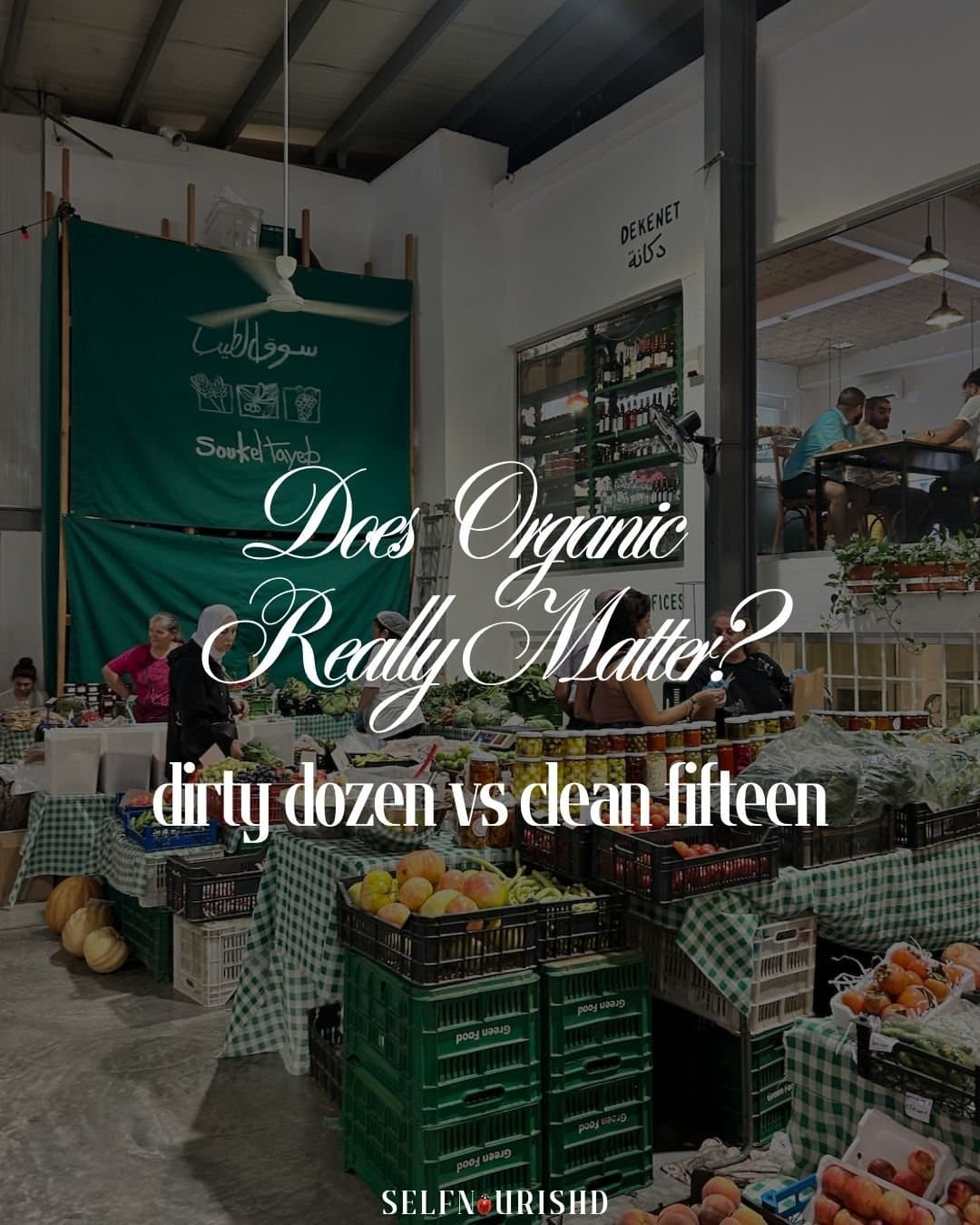
The organic vs. conventional debate can feel overwhelming — and expensive. But the truth is, you don't need to buy everything organic to make a meaningful difference. Two lists, the Dirty Dozen and the Clean Fifteen, exist specifically to help you shop smarter without spending more than you need to.
The Dirty Dozen
These are the fruits and vegetables that tend to carry higher pesticide residues — and the important thing to know is that residues can remain even after washing. Their thin skins, soft flesh, or the way they're grown means pesticides absorb more readily into the parts you eat.
The Clean Fifteen
These produce items generally have thicker skins, which act as a natural barrier and limit how much pesticide gets into the edible portion. Conventional versions of these are generally considered a reasonable choice, which is where you can save your money.
Dirty Dozen
Thin skins and soft flesh mean pesticide residues tend to stay on — or in — the fruit, even after a good wash. Prioritise organic here.
Clean Fifteen
Thicker outer skins act as a natural barrier. Pesticide residues on the edible portion tend to be much lower, so conventional is generally fine.
The Mindset Shift: Intentional, Not Perfect
Buying organic across the board isn't realistic for most people — and it doesn't need to be. The whole point of these lists is to help you make intentional swaps rather than stressing about getting everything right. Focus your organic budget on the Dirty Dozen, and feel good about buying conventional for the Clean Fifteen.
If you eat the skin, go organic when you can. If the skin is thick and you don't eat it — like with avocados, pineapples, or bananas — conventional is generally a reasonable choice.
- Buying organic versions of Clean Fifteen produce (like avocados and pineapples) and skipping organic on the Dirty Dozen — that's the wrong way around.
- Assuming washing removes all pesticide residues from Dirty Dozen items. It helps, but residues can still remain.
- Going all-or-nothing: either spending a fortune on everything organic, or giving up on it entirely because it feels too expensive.
- Forgetting that eating more fruits and vegetables — even conventional — is still a great choice for your health.
This week, screenshot or save the two lists before your next grocery run. When you're standing in the produce aisle, you'll know exactly where to reach for the organic option — and where you can put the money toward something else.